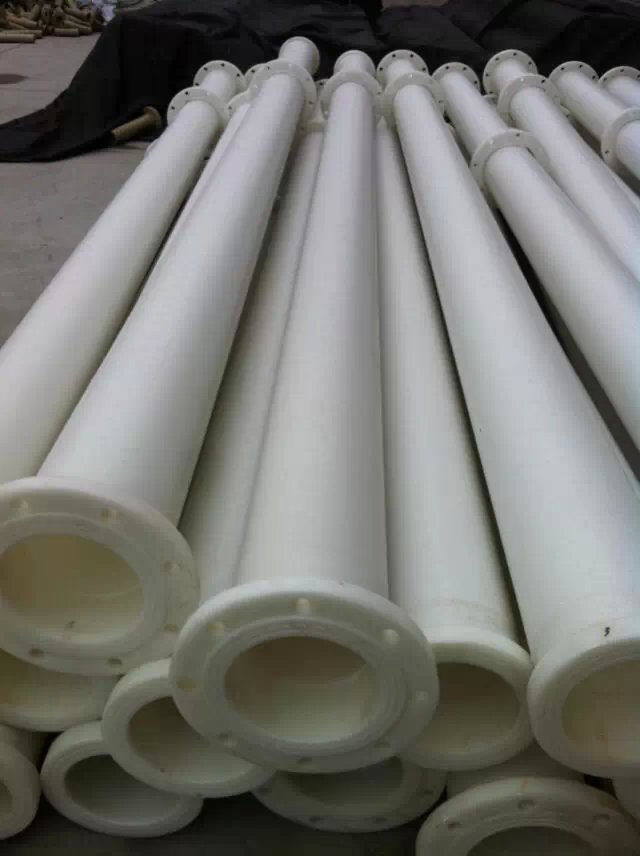
When a process engineer specifies “pipe” on a P&ID, the material choice that follows determines whether the system runs for 20 years or leaks within 2. The options — FRPP (Fiberglass Reinforced Polypropylene), PVC/CPVC, and carbon steel — each have distinct sweet spots defined by temperature, pressure, and chemical compatibility. Picking the wrong one means either spending too much upfront or spending too much on repairs. Here is the complete comparison.
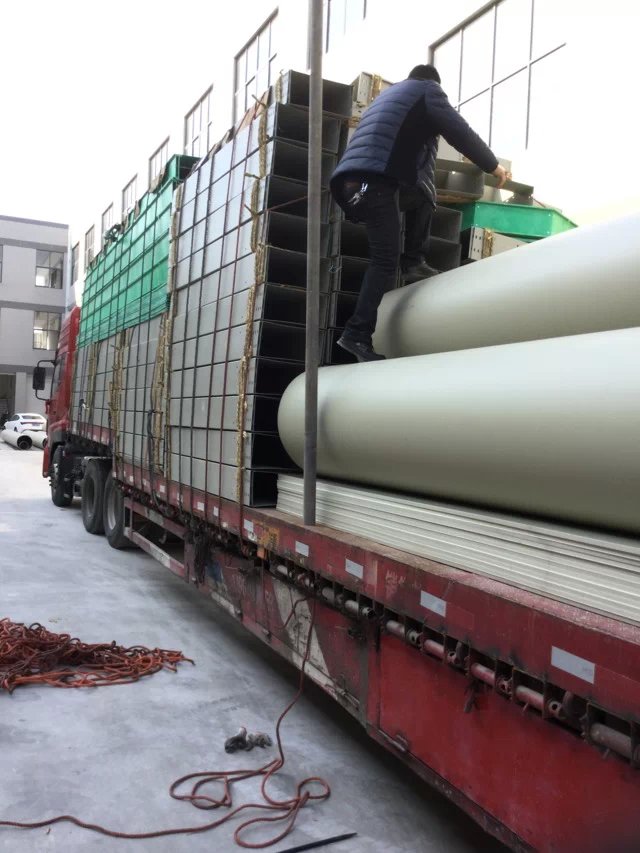
What Are FRPP, PVC, and Carbon Steel Pipes — Material Science
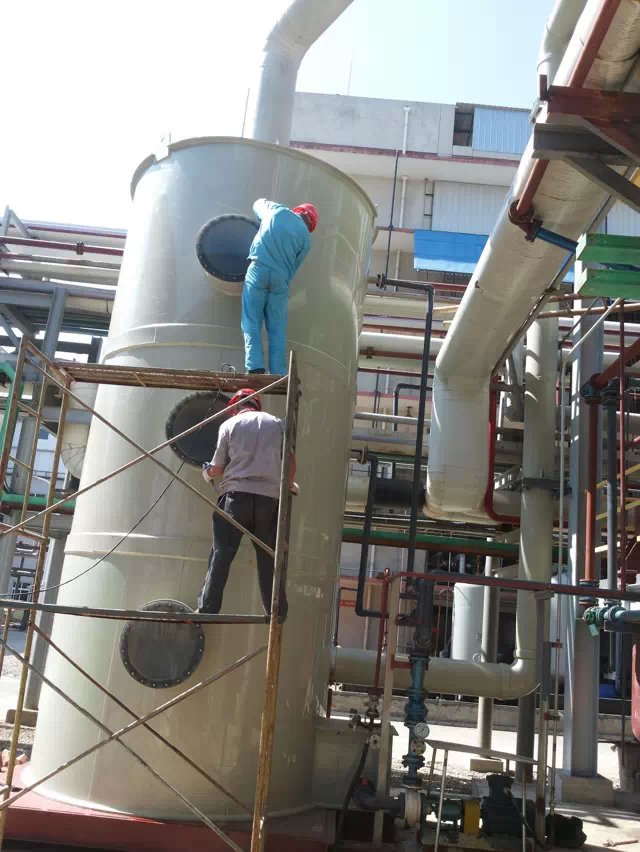
FRPP pipe combines a thermoplastic polypropylene (PP) inner liner with a glass fiber-reinforced thermoset structural wall. The PP liner provides chemical resistance — PP is resistant to most acids, alkalis, and solvents at temperatures up to 80°C. The FRP structural wall provides hoop and axial strength that unreinforced PP cannot achieve, extending the pressure rating and diameter range. The bond between the PP liner and the FRP wall is mechanical — the liner is textured on the outside so the thermoset resin keys into it during curing.
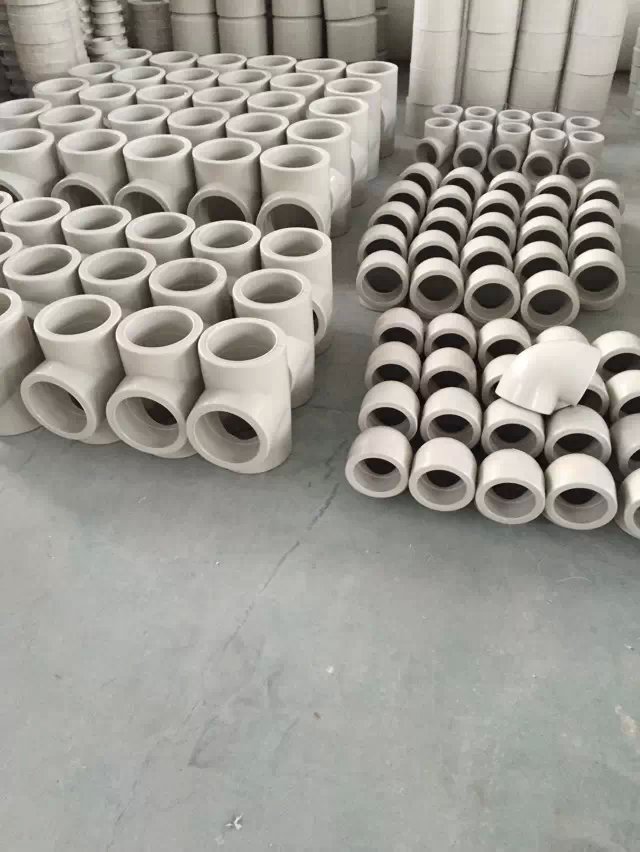
PVC (polyvinyl chloride) and CPVC (chlorinated PVC) are unreinforced thermoplastics extruded into pipe. PVC is rated for service up to 60°C; CPVC extends this to 90°C through additional chlorination that increases the glass transition temperature. Both rely entirely on the polymer for strength — there is no fiber reinforcement. This limits their pressure rating at larger diameters and higher temperatures.
Carbon steel pipe (ASTM A53/A106) is the industrial default. It is strong (tensile strength 415 MPa minimum), available in every size, and familiar to every pipefitter. It is also chemically incompatible with most acids, prone to corrosion in water service, and 3–4× heavier than equivalent FRP or plastic pipe.
Performance Data — Temperature, Pressure, and Chemical Resistance
Temperature capability drives material selection in most industrial piping systems. FRPP handles 80°C continuous, 95°C intermittent. PVC is limited to 60°C — above that, it softens and loses pressure capacity. CPVC reaches 90°C but becomes brittle after extended exposure at the upper end of its range. Carbon steel handles temperatures to 400°C+ with appropriate pressure derating, making it the only option for steam, hot oil, and high-temperature process lines.
Pressure ratings depend on diameter. At 100 mm diameter, FRPP is typically rated for 10–16 bar, PVC for 10–16 bar (at 23°C, derated sharply above 40°C), CPVC for 16–25 bar, and carbon steel Schedule 40 for 40+ bar. The key distinction is how pressure capacity changes with diameter: FRP and steel maintain pressure ratings at larger diameters by increasing wall thickness. PVC and CPVC cannot economically increase wall thickness beyond certain limits, so their pressure ratings drop rapidly above 200 mm diameter.
Chemical resistance is where the materials diverge most. FRPP (with PP liner) resists the broadest range of chemicals — strong acids (sulfuric, hydrochloric, phosphoric), strong bases (sodium hydroxide, potassium hydroxide), salt solutions, and most organic solvents at ambient temperature. PVC resists acids and bases but is attacked by many organic solvents (ketones, esters, aromatics) that swell and soften the polymer. Carbon steel is attacked by any acid with pH below about 4, any aqueous salt solution that supports electrochemical corrosion, and any moist environment — which is to say, carbon steel corrodes in virtually all industrial fluid services without coating or lining protection.
Manufacturing and Quality Control
FRPP pipe manufacturing starts with extrusion of the PP liner tube, which is then filament-wound with glass fiber and resin to build the structural wall. Quality control includes: liner thickness verification (minimum 2–3 mm), hydrostatic testing at 1.5× the rated pressure, and spark testing of the liner at 10 kV to detect pinholes. Each pipe section is inspected for liner-to-structural-wall delamination using coin-tap or ultrasonic methods.
PVC pipe manufacturing is a continuous extrusion process with simpler QC: dimensional checks, flattening tests for ductility, and hydrostatic burst testing on samples from each production run. The simplicity of manufacturing is PVC’s advantage — it produces consistent pipe at the lowest cost per meter of any rigid pipe material.
Cost Structures and Lifecycle Analysis
Installed costs per meter for 150 mm diameter pipe: PVC ($25–45), carbon steel Schedule 40 ($40–70), FRPP ($60–100), CPVC ($70–110), 316L stainless steel ($120–200). These are material plus installation labor. However, the installed cost tells only the first chapter of the story. Carbon steel pipe in corrosive service requires coating maintenance, periodic thickness testing, and replacement every 10–15 years. Over a 20-year lifecycle, FRPP and carbon steel have comparable total costs in corrosive service — FRPP’s higher upfront cost is offset by zero corrosion maintenance. PVC has the lowest 20-year cost in services within its temperature and chemical limits.
Industrial Pipe Material Comparison
| Property | FRPP | PVC | CPVC | Carbon Steel |
|---|---|---|---|---|
| Max Temp (continuous) | 80°C | 60°C | 90°C | 400°C |
| Pressure @ 150mm | 10–16 bar | 10–16 bar | 16–25 bar | 40+ bar |
| Acid Resistance | Excellent | Good | Good | Poor |
| Base Resistance | Excellent | Good | Good | Good |
| Solvent Resistance | Excellent | Poor | Poor | Excellent |
| Density (g/cm³) | 1.5–1.6 | 1.4 | 1.5 | 7.85 |
| Joining Method | Butt-fusion + FRP | Solvent cement | Solvent cement | Welded/threaded |
| 20-Year TCO Index | 1.2× | 1.0× (baseline) | 1.5× | 1.5–2.0× |
FRP TSTAR supplies FRPP, GRE, and GRP pipes with full engineering support including chemical compatibility analysis, pipe stress calculations, and joint design. Contact us with your process conditions for a material recommendation and installed cost estimate.