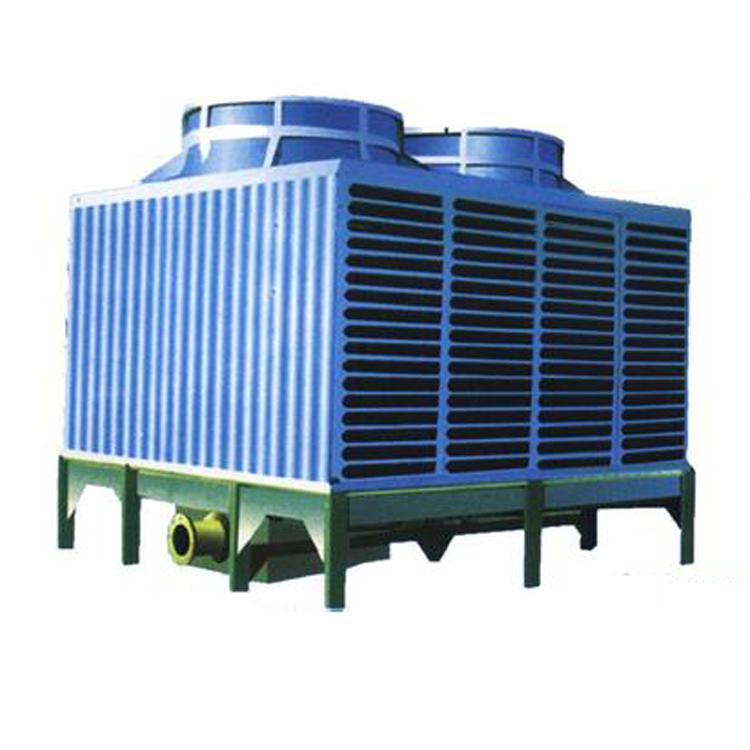
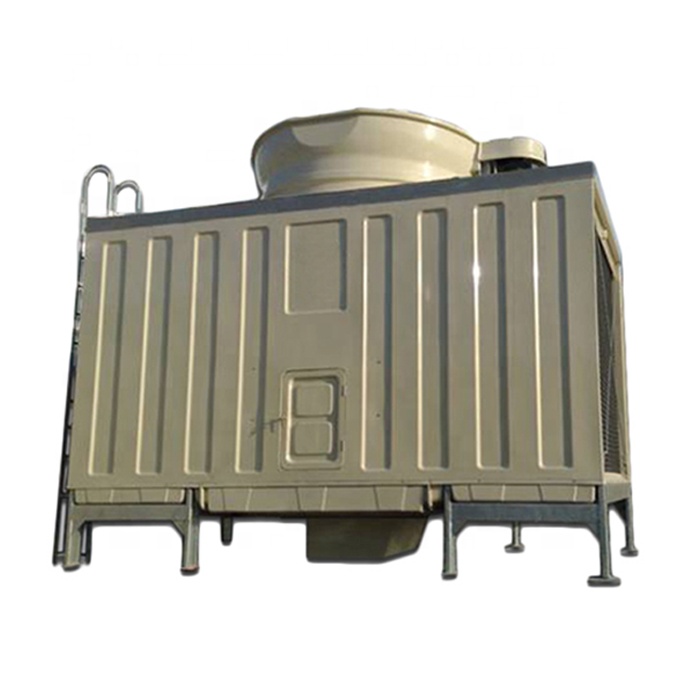
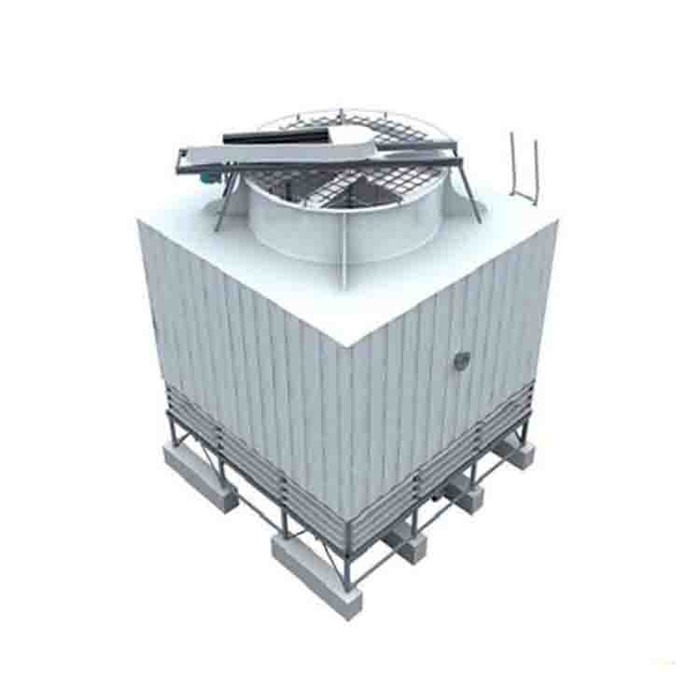
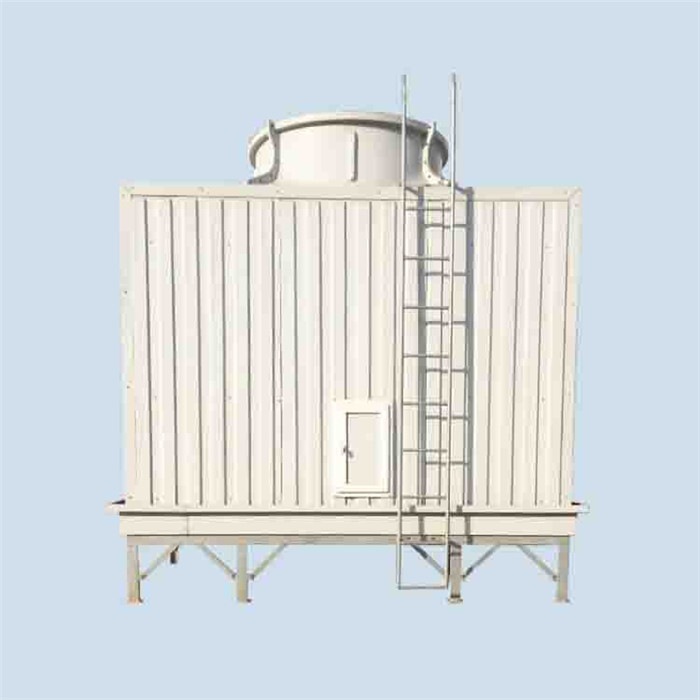
Cooling towers are the lungs of industrial facilities — they reject waste heat from HVAC systems, manufacturing processes, and power generation. In chemical plants, steel mills, and coastal installations, the cooling tower itself faces an existential threat: the very environment it operates in. Galvanized steel towers corrode within years. FRP (Fiberglass Reinforced Plastic) cooling towers are designed to last decades in these conditions. Here is how they are engineered.
Why FRP for Cooling Towers
The cooling tower environment is uniquely hostile. Warm, moist air saturated with treatment chemicals continuously circulates through the structure. The water itself may contain chlorides, sulfates, or process contaminants. Galvanized steel relies on a zinc coating that sacrificial corrodes — once the zinc is gone, the underlying steel rusts through in months.
FRP is inherently immune to this corrosion. The polyester or vinyl ester resin matrix does not react with water treatment chemicals, salt spray, or industrial contaminants at any concentration found in cooling tower service. Independent testing shows FRP cooling tower casings retaining full structural integrity after 20 years of continuous operation in coastal environments where galvanized steel towers required replacement after 5–7 years.
Counterflow vs Crossflow Design
Counterflow towers move air vertically upward while water falls downward through the fill media. The counter-current flow maximizes heat transfer efficiency — the coldest water meets the driest air at the bottom of the tower. Counterflow designs are more compact for a given capacity and are the dominant choice for industrial applications above 100 tons.
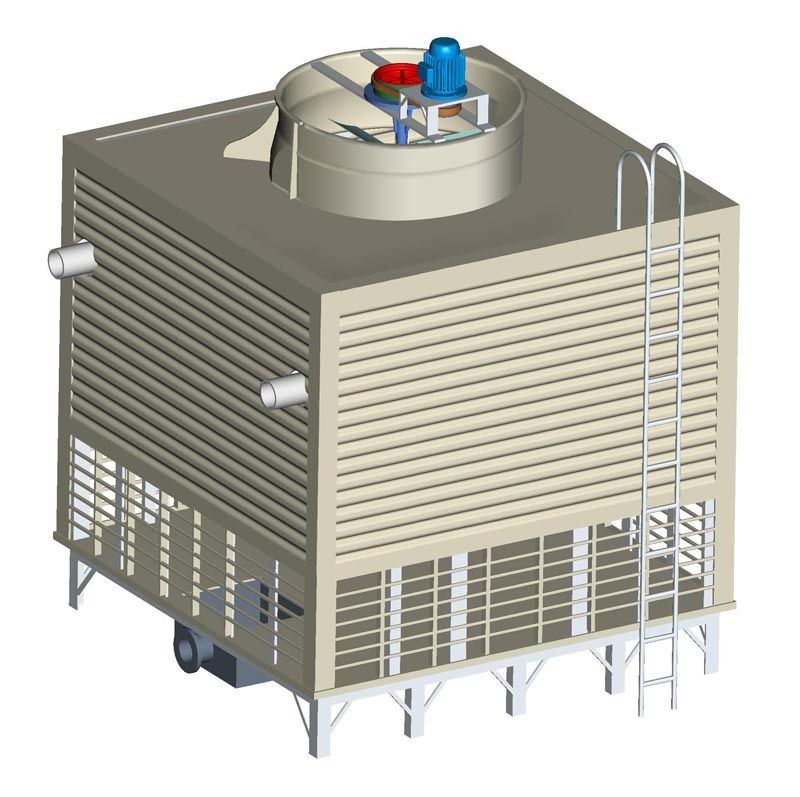
Crossflow towers draw air horizontally across falling water. The fill media is accessible from the sides, making inspection and replacement easier without entering the tower. Crossflow designs have lower air pressure drop, meaning smaller fan motors for the same airflow. They are preferred for HVAC applications where routine maintenance access is a priority over compact footprint.
Capacity Sizing and Energy Efficiency
Cooling tower capacity is measured in tons — one ton equals 12,000 BTU/hr of heat rejection. For industrial process cooling, the heat load calculation must account for not just the process equipment nameplate rating, but also pump heat, piping losses, and a safety factor (typically 20–25%) for fouling and degradation over time.
Fan power consumption is the dominant operating cost. Modern FRP cooling towers use aerodynamic FRP fan blades with optimized airfoil profiles that reduce power draw by 10–15% compared to older designs. Variable frequency drives (VFDs) on fan motors provide additional savings by matching fan speed to actual heat load rather than running at full speed continuously.
FRP vs Galvanized Steel vs Concrete
| Property | FRP | Galvanized Steel | Concrete |
|---|---|---|---|
| Corrosion Resistance | Excellent (inherent) | Moderate (coating dependent) | Good (chemical attack risk) |
| Weight | Light (1.8 g/cm3) | Heavy (7.8 g/cm3) | Very Heavy (2.4 g/cm3) |
| Service Life (coastal) | 20+ years | 5–7 years | 15–20 years |
| Installation | Modular, fast assembly | Bolted, moderate speed | Requires crane + foundation |
| Maintenance | Minimal (wash down) | Recoating, rust repair | Crack repair, sealing |
| Upfront Cost (per ton) | $80–120 | $60–90 | $100–150 |
FRP TSTAR supplies FRP cooling towers from 50 to 500 tons capacity, with counterflow and crossflow designs available. Custom engineering for corrosive environments, high-temperature applications, and space-constrained installations.